
San Francisco – May 5, 2026
For five weeks, the Swissnex in San Francisco office was taken over by the creative crew from Zurich University of the Arts (ZHdK) who moved into Pier 17 and transformed it into an exhibition on Algorithmic Entanglements. Robots, screens, pixels, glitches, and even a physical replica of the viral AI-generated image of the Pope in a Balenciaga “puffer: coat. We are living in times when not only humans but also machines sense, act, and potentially develop a life of their own. Algorithms increasingly perform as evidence-making agents, blurring the lines between fact and fiction. But what about the social frictions and ecological costs? And where does creative agency come in, not just to question these developments, but to shape what comes next?
From March 4–7, the REFRESH 2026 festival days brought keynotes, masterclasses, guided tours, and conversations to the intersection of the arts, design, and technology, exploring how culture, power, and planetary well-being are not separate problems but deeply entangled ones.
REFRESH is an interdisciplinary, international festival initiated by the Department of Design and the Immersive Arts Space at Zurich University of the Arts, dedicated to immersive arts and the future of design. Lucas Hagin, Creative Industries Program Manager at Swissnex in San Francisco, spoke with Maike Thies, the curator behind REFRESH, to talk about what brought the festival to San Francisco and what happens when creatives stop observing technology and start authoring it.
Lucas Hagin: What I’m really curious to know is what drew you all to having a festival and exhibition in San Francisco.
Maike Thies: From the very beginning of REFRESH, we planned to travel with the festival to different cities around the globe to meet artists and designers embedded in their local cultural ecosystem. We’ve been to Copenhagen once, but then COVID hit the world, so we stopped planning other festival editions abroad. In the following years, we began collaborating with various international cultural partners to bring acclaimed international artists and designers to the Zurich University of the Arts.
It is also how we started to collaborate with the Swissnex network. It was a great opportunity to finally meet the CEO of Swissnex in San Francisco during one of her visits to the Zurich University of the Arts in 2025. We had the chance to introduce REFRESH and revisit the «travelling festival idea» during our conversation. A few weeks later, we received the official invitation from Swissnex to come to San Francisco.
At REFRESH, we focus on projects that show a meaningful and artistic use of technology. The invited artists encourage responsible engagement with the world and call for involvement.
LH: Let’s talk a bit about the intersection of art, design, and technology. How do you view the relationship between the two worlds? How does the intersection inspire you in your own work?
MT: I believe that the arts and design are crucial for responsible and innovative technological developments. At REFRESH, we highlight outstanding artists and designers and their design processes that shape how we think about technological progress and digital transformation. It’s at the core of the design discipline to approach a problem from a multidimensional perspective and to anticipate potential socio-political and ecological effects of a development and implementation process of an innovation. It’s the analytical capacity of designers and, at the same time, their ability to make an idea, a complex topic tangible that makes them the backbone of technological developments.
REFRESH is, in a way, breaking the «hype cycle» of technological innovation. At REFRESH, we focus on projects that show a meaningful and artistic use of technology. The invited artists encourage responsible engagement with the world and call for involvement.
LH: Following up on that a bit – how has your curatorial practice evolved as technology evolves?
MT: I think that technological frameworks should facilitate and support an artistic process. In my curatorial practice, I am always following a content-first strategy. A mere fascination with technological development can be easily misleading.
For me, the intersection of arts, design, and technology becomes fruitful when you can immediately sense the urge of the artist behind the project to get into a conversation with you and encourage you to get your mind spinning. I am very much intrigued by artistic processes and appreciate how artists and designers present the findings of their research in an abstract aesthetic form – in a hyper-object.
So, to fully answer your question, I don’t feel that my curatorial practice evolves with technology; rather, it evolves through the exchange processes with the artists and designers I come into contact with, through discussions with the REFRESH audience, and the critical reflection on the overall discourse around digital transformation at school.
LH: And flipping the perspective a bit, how do you think what you do, and the messages you want to convey, could influence how technology is built, deployed, and used – or can it have that kind of impact?
MT: I am sure that the conversations resonate with the audience and shape how they see their role and capacity in building wishful todays and tomorrows. A critical discussion following the keynotes, masterclasses, and exhibition visits at the REFRESH festival is the best indicator that people reached the core of the curation.
I see a huge potential in bringing people from different cultural and disciplinary backgrounds together. REFRESH is an invitation to exchange viewpoints and connect. Over the years, we have seen a growing festival community. So yes, the festival can, in a particular way, positively impact our understanding of technology and the ethics that are crucial to the deployment process.
REFRESH 2026 in San Francisco
-
![]()
-
![]()
-
![]()
-
![]()


LH: Thinking a bit more broadly – how do you envision the impact of digital technologies on society and the planetary well-being? How do you respond to that in your curatorial work? How crucial is your role in pushing digital transformation to be responsible and a benefit versus a harm to society?
MT: Despite the fascination with automation, computational systems, and machines, it is important to examine the social frictions and ecological costs that may result from the proliferation of these algorithmic agents and technological frameworks.
In my curatorial practice, I acknowledge that everything is connected – entangled. Every action that we humans, other non-human creatures or machines affect the flow and balance of the whole planet; and thus its well-being. Instead of focusing on a rather simplified narration and understanding of technological progress, I am encouraging a holistic and ontological perspective – one that is built on ethics and long-term thinking in support of future generations.
LH: How do you see the position of the Department of Design at ZHdK’s and its relevance in this conversation?
MT: While working in the educational sector, I have the opportunity to strengthen the visual and digital literacy of the students in classes and mentorings, and to encourage them to impact different industry sectors with the knowledge they have acquired and their incredible talent.
At the Department of Design, we are constantly reflecting on what a contemporary, state-of-the-art education is. We not only teach disciplinary skills, but also deeply reflect on the ecological and socio-political effects of our actions as designers. We motivate and support our students to mediate on the challenging problems of our times. I am convinced that the way we teach design at school resonates with our students and, thus, with the various industry sectors after their graduation.
LH: And finally, going a bit full circle here, since we’re having this conversation at Swissnex, what are your hopes with how those in the creative industries in the US and Switzerland can learn from each other. What do you think you bring to the table in those discussions and collaborations?
MT: The Bay Area was an ideal location for the festival because it is one of the world’s leading hubs of technological innovation. It was a great opportunity to connect and exchange with representatives of the industry, the creative scene and the educational sector. We hope to build on the contacts we made during our time at Swissnex and bring some of those people to Zurich University of the Arts for REFRESH 2027 to continue the conversation together with the local community.
Maike Thies
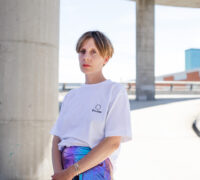
Maike Thies is a Research Fellow at the Department of Design at ZHdK. In her curatorial practice, teaching, and artistic research, she focuses on the intersection of arts, design, technology, ecology, and society. She is particularly interested in contemporary video games and virtual worlds, as well as in participatory and immersive performance settings and exhibition formats that intertwine physical and digital space. She co-directs the interdisciplinary REFRESH with Prof. Dr Christopher Salter and is responsible for the festival's curation.
Maike has co-curated exhibitions and festivals across Switzerland and internationally — including Game Design Today at the Museum für Gestaltung Zürich and the Design Biennale Zurich in 2019 on the topic «PLAY» — and was named a «Digital Shaper» in the Creatives category in 2020.
Lucas Hagin
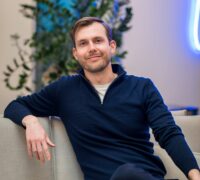
Lucas Hagin runs the Creative Industries program at Swissnex San Francisco, where he shapes and delivers initiatives at the intersection of technology and creative practice across media, culture, and AI. Over the past year, he has executed 30+ events and built fellowship programs across the Bay Area, convening creatives, founders, and institutions around questions of trust, agency, and distribution in the age of AI. Before Swissnex, he co-founded a software company at the intersection of technology and cultural institutions, where he led growth and business development. His work tends to live where commercial innovation, cultural relevance, and community meet, pairing execution with curation.