
In the major international rankings like the QS Ranking and the Times Higher Education (THE), Hong Kong appears consistently as one of the best performers. Since 2022, it has 5 universities among the top 100, as the Hong Kong Government is proud to point out, no other city in the world has this many [1]. Another defining feature is its unique blend of East and West with strong academic connections around the world. As a whole, according to QS World University Rankings Hong Kong ranks 6th globally[2] for overall university system strength, just ahead of Switzerland in 7th position.
Most of the universities in Hong Kong were founded when the territory was still under British rule and therefore share similarities with British academic institutions. This historical backdrop also explains the strong collaborations that have developed over the years with the anglophone academic world (particularly Great Britain, the United States, and Australia).
In 1997, Hong Kong was returned to Chinese sovereignty and in the 30 years since, its universities have begun playing an important role in the Chinese mainland, establishing a presence and building collaboration networks with institutions especially in the neighbouring province of Guangdong.
The broader context of local integration with the rest of China, but particularly the major technological and economic hubs next door, continues as a government priority and is reflected in the rankings of Hong Kong’s universities. The city plays a major role as a key component of the Greater Bay Area (GBA)[3], an economic megaregion that links nine cities in Guangdong Province with the two special administrative regions of Hong Kong and Macao. Based on the latest official figures, the total population in the GBA is over 88 million[4] and the GDP is over CHF 1.8 trillion in 2025. For Hong Kong’s universities, the GBA is particularly relevant because it provides access to a much larger surrounding ecosystem of technology companies, manufacturing capabilities, research institutions and investment capital.
The Northern Metropolis[5] is a key component in strengthening these connections. Located right at the border of Hong Kong and Shenzhen, it includes a variety of elements, including a technological park and residential areas. The Hong Kong Government announced that it will be developed as an international innovation hub and that will be home to roughly 2.5 million people and will offer 650 000 jobs, including 150 000 in the I&T sector.[6]
Hong Kong itself has been assigned clear, ambitious goals in research, innovation and reindustrialisation. as part of China’s overall policy commitment to increase its technological self-reliance, this is also an important factor to consider when assessing the city’s higher education system. Crucially, it has also been tasked with acting as a superconnector bridging China and the World across industries and to double down on technology as a driver for growth. This opens up clear opportunities for Swiss educational institutions to leverage the city as a vital part of their international collaborations strategy.
HK’S TERTIARY EDUCATIONAL SYSTEM IN A NUTSHELL
The Hong Kong tertiary educational system is composed of 3 types of institutions:
Publicly Funded Universities
In total, there are eight universities funded by the University Grants Committee, this includes a substantial public support of R&D, allowing them to dedicate resources to basic research and play a leading role in various fields. Of these universities, four are in the global top 50[7] of the QS World University Rankings:
#11 – The University of Hong Kong (HKU)
#18 – The Chinese University of Hong Kong (CUHK)
#33 – Hong Kong University of Science and Technology (HKUST)
#50 – The Hong Kong Polytechnic University (PolyU)
#52 – City University of Hong Kong (CityU)
#216 – Hong Kong Baptist University (HKBU)
#406 – The Education University of Hong Kong (EdUHK)
#581 – Lingnan University (LU)
All of them feature high proportions of international faculty, non-local students, cross-border joint research projects and world-class facilities. Some of them have particularly strong reputations in technological fields: HKU is known for its Data Science and AI programs, HKUST is renowned for computer science, and business, while PolyU and CityU are both recognized for their strong engineering, tech, and business faculties.
Private, self-financing Institutions[8]
There is a total of 13 private institutions these include: The Hang Seng University, the Centennial College and others. Being self-financing, their focus is primarily on teaching, rather than cutting edge research which requires budgets that only the UGC backed universities are eligible for.
Sub-Degree Providers
The Vocational Training Council (VTC) and the community colleges provide associate degrees and higher diplomas.
RESEARCH – INNOHK CLUSTERS
InnoHK[9] is a major I&T initiative of the Government to[10] develop Hong Kong as a hub for global research collaboration, with the aim to attract some of the top institutions around the world to collaborate with local universities/institutions to set up research centres and laboratories in Hong Kong. Within this initiative, two research clusters have already been established: Health@InnoHK (healthcare), and AIR@InnoHK (AI and Robotics) and a third cluster, SEAM@InnoHK, focused on sustainable development, energy, advanced manufacturing and materials was recently created earlier this year.
InnoHK Research Cluster Funding
– Government commitments (currently at CHF 1.33 billion)[11].
– Subsidies: The Innovation and Technology Fund (ITF) finances setup costs, high-end infrastructure (e.g. cleanrooms, hybrid operating suites), and core operational expenses.
– Matching/Collaborative R&D[12]: These Centers are hosted by local universities (e.g., HKUST, CUHK) but are required to co-operate with leading international partner institutions and together they leverage grants, industry contracts, and commercialization channels.
RESEARCH - UNIVERSITY LEVEL
University Research Funding
The publicly funded institutions receive allocations and competitive grants through the University Grants Committee (UGC). Each then coordinates grant applications, manages contracts, and administers internal awards through their own Internal Research Services Offices. The UGC periodically assesses university performance to ensure appropriate use of funds, this is known as the Research Assessment Exercise (RAE).
Collaborations
These include Cross-Disciplinary Hubs within the same university. Institutions often build internal labs and entrepreneurship centers (e.g., HKU’s iDendron) to boost cross-faculty innovation. Academic staff are also actively encouraged to pursue commercial and technological consultancy projects with external industries. Apart from the collaborations channelled through InnoHK, Hong Kong universities are part of Global Networks where major universities partner with international institutions (including Cambridge University, Institut Pasteur, and Karolinska Institutet) for joint studies and regional research facilities.
The high citation impact of the research conducted in Hong Kong reflects a deep integration with the rest of China and across the world especially with the United States, Europe and increasingly as well with “Belt and Road Initiative” countries in Asia, Middle East, and Africa. However, Hong Kong’s determination to achieve top global university rankings sometimes narrows cooperation opportunities to only the very top global peers.
IMPORTANT ACADEMIC CONTRIBUTIONS
Hong Kong universities have produced some highly influential and frequently cited papers:
A good example is that of the facial recognition algorithms developed by Professor Xiaoou Tang[13]’s team at the Chinese University of Hong Kong (CUHK). These achieved over 97% accuracy on standard benchmarks early in the deep learning boom, surpassing human-level recognition and laying the foundation for modern computer vision.
Another example is the Non-Invasive Prenatal Testing (NIPT) developed by Professor Dennis Lo, also at CUHK[14]. Professor Lo introduced plasma DNA analysis for non-invasive prenatal diagnosis, revolutionizing prenatal screening globally and earning him international awards.
Crucially, the highly influential virology papers led by the HKU microbiology teams made a substantial contribution in the fight against COVID-19[15]. These teams had already isolated the SARS virus back in 2003 and were able to quickly react to the SARS-CoV-2 when it appeared. During the pandemic they published landmark early transmission, viral load, and vaccine-efficacy studies in top-tier journals like The Lancet and Nature Medicine providing essential findings to fight the virus.
These are just some of the many scientific contributions Hong Kong has been making recently. When we consider them in conjunction with all the contributions made across the GBA, a clear picture emerges: According to the Global Innovation Index published by the World Intellectual Property Organization (WIPO)[16], the Shenzhen-Hong Kong-Guangzhou cluster is the global leader. This means that this region in the south of China has the highest concentration of patent filings, publications, and venture capital deals anywhere in the world.
TECHNOLOGY TRANSFER
In the Hong Kong ecosystem, technology transfer relies on a variety of programs and institutions:
Technology Transfer Offices (TTOs)
Each university has its own Technology Transfer Office tasked with handling invention disclosures, patent filings and copyright protection. These offices handle industry-sponsored research contracts, negotiate licensing agreements with the corporations that partner with the university and bring discoveries to market.
Funding and Government Support ITF Subsidies
The HK government provides funding through its Innovation and Technology Fund (ITF), with a maximum annual funding to these Technology Transfer Offices up to HKD 16 million (CHF 1.6M) per university to boost patent and licensing capabilities.
Technology Start-up Support Scheme Program
Another Government program, the Technology Start-up Support Scheme for Universities (TSSSU) also provides funding but in this case, it goes directly to university teams to help launch spin-offs and commercialize discoveries.
SPIN-OFFS
In Hong Kong, as is common in other territories, there are typically three ways in which research reaches the market: collaborative research, licensing, and spin-offs. These spin-offs are then financed through a combination of government grants, institutional venture funds, dedicated commercialization subsidiaries, and VC partnerships.
Government Grants and Schemes:
– RAISe+: supports commercialization of R&D, with up to HKD100 M (CHF 9.9 M)/ team over 5 yrs
– Innovation and Technology Fund (ITF): backs early-stage R&D projects across institutions.
– Hong Kong Investment Corporation (HKIC): supplies patient capital.
University Venture Funds & Partnerships:
– Joint Funds between universities and VCs: Co-branded funds matching universities with VC.
– Entrepreneurship Engine Funds (EEF): These are Seed and early-stage funds managed by universities to support deep tech spin-offs.
– Commercialization Arms (e.g., CUHK Innovation): These are dedicated corporate subsidiaries that bridge academia and industry to secure funding.
Internal Incentives & Equity Models
Across the world, many spin-off programs are plagued by unattractive terms for founders. HK seeks to tackle that on two fronts:
– Flexible Equity: Institutions increasingly accept smaller equity stakes or flexible licensing fees instead of upfront cash.
– Revenue Sharing: some universities have increased inventor shares of patent income to up to 70%.
Over the years HK universities have produced several well-known spin-offs. Examples include DJI (which was founded by a student at HKUST)[17], now one the world’s leading consumer drone manufacturers, and BioMed Technology Holdings (CUHK)[18] whose precision medicine company focuses on microbiome testing services and probiotic health products.
There are many other examples, including Stellaris AI (HKU), an independent large language model built from scratch, or Cornerstone Robotics (CUHK) a precision surgical robotics startup.
ACADEMIC LINKS BETWEEN SWITZERLAND AND HONG KONG
The academic collaboration between Hong Kong and Switzerland is highly decentralized and research funding is approved on a project-by-project basis through diverse instruments from either side. Most notably, these include the Swiss National Science Foundation (SNSF) and the ‘Leading House” model, which supports cooperation with research institutions in specific regions and is newly hosted by the University of Zurich for the Asia-Pacific region, as well as Hong Kong’s Research Grants Council (RGC).
All main Hong Kong universities (such as HKU, CUHK, and HKUST) have established reciprocal student exchange agreements with Swiss institutions, including the Swiss Federal Technology Institute of Lausanne (EPFL), ETH Zurich, the University of Zurich, University of St. Gallen, University of Lausanne (UNIL), and University of Geneva. They all maintain active student exchange, dual degree, or research partnerships with major universities in Hong Kong.
Additionally, the Future Leaders Exchange program facilitates lab-to-lab visits and short-term mobility from two weeks to six months for doctoral candidates. High-achieving scholars can further apply to mechanisms like the Hong Kong PhD Fellowship Scheme designed to attract top international students to pursue full-time PhD studies at eight eligible universities in HK.
Another sign of the strong ties is that several faculty members in Hong Kong hold degrees from Swiss Institutions and most Swiss universities have local alumni chapters.
Hong Kong officials and delegations (including universities) actively benchmark against and partner with competitive Swiss universities to shape higher education development and innovation hubs like the Northern Metropolis.
This long-standing collaboration between Swiss and Hong Kong institutions has already produced some major breakthroughs. In fact, Swiss research institutions are playing an important role in several of the InnoHK centers mentioned earlier. Most prominently:
ACCESS (AI Chip Center for Emerging Smart Systems)
– Partners: HKUST and the École Polytechnique Fédérale de Lausanne (EPFL).
– Focus Areas: Computing-in-memory architectures and hardware-software co-design to create ultra-efficient AI chips.
Multi-Scale Medical Robotics Center (MRC / “Med Robotics”) under AIR@InnoHK
– Partners: CUHK and Swiss Federal Institute of Technology Zurich (ETH Zurich).
– Milestone Achievement: Successfully launched the world’s first in vivo teleoperated magnetic endoscopy across 9,300 km, marking a major advance in remote surgical interventions [19].
CONCLUSION
Switzerland and Hong Kong both have internationally competitive research institutions and established innovation ecosystems, with particular strengths in deep-tech and biomedical research. Their collaboration has already produced impressive results in research as well as researcher mobility and technology development and the many institutional links provide a solid basis for further cooperation.
Hong Kong’s increasingly important role within the Greater Bay Area opens up additional opportunities for cooperation between Swiss institutions and the innovation ecosystem of southern China in research, technology transfer and doctoral and researcher mobility. For Swiss universities and research organizations, there will be opportunities not only in partnerships with Hong Kong universities, but also in developing joint programs with companies and innovation platforms the Greater Bay Area as a whole.
Author
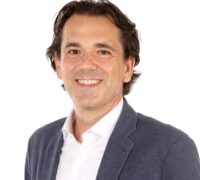
Entrepreneur and Business leader
Alfonso Ballesteros is an entrepreneur and business leader with extensive experience in Asia. He is Founding Partner at Crossbow, a firm specialized in accelerating the expansion of Western tech firms in Asia and is also a Venture Scout for Alumni Ventures (one of the top 20 VC firms in North America according to CB Insights).
Alfonso is also very involved in Chambers of Commerce and Associations. He was recently re-elected Chairman of the Europe Committee of the Hong Kong General Chamber of Commerce (HKGCC), the oldest and most prestigious business organisation in Hong Kong and earlier in his career was the General Manager of the Spanish Chamber of Commerce in Hong Kong for 5 years.
He is also a mentor at the HK Science and Technology Park (HKSTP) incubation programs and was previously a mentor at TechStars APAC Founder Catalyst Program as well as a member of the Investment Committee at the HK PropTech Association.
Member of the Advisory Board at Conexión Espana, a global network created by the Spanish Government to bring under one roof all the top Spanish talents scattered around the world. Alfonso holds an MBA in International Commerce by CECO in Spain, a BA(hons) in Economics by the University of Stirling in Scotland and as well as a Kauffman Fellows & TechStars Venture Deals certification.