Project Lead
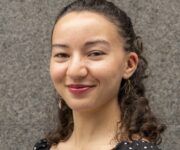
Leïla Joutet
Junior Project Manager, Science Communication
The evening begins with a screening of Fukai Sango, a documentary film that offers a powerful entry point into the world of coral reef ecosystems and the fragile interdependencies that sustain marine life. Moving from the specificity of corals to broader questions of biodiversity, the program invites reflection on how human activity reshapes ecosystems, and how science, storytelling, and collective knowledge can contribute to their protection and restoration.
The screening will be followed by a panel discussion with experts working at the intersection of marine biology, conservation, and visual storytelling. Together, we will explore human pressures on ecosystems, scientific approaches to conservation and restoration, and existing protection frameworks, along with their gaps. The conversation will also address the role of public engagement and reflect on why biodiversity matters to everyone.
This event is part of the Planetary Embassy in Japan, a global initiative that brings together science, art, policy, and youth perspectives to address pressing planetary challenges.
Bio
Frederic Sinniger Harii is a Swiss biologist, working at the University of the Ryukyus in Okinawa, and a National Geographic Explorer studying marine biodiversity and ecology. His research on the deep parts of coral reefs, between 30 and 120 meters in depth, examines how these ecosystems can contribute to the coral reef conservation in a warming ocean and identifies the threats they face. Through his work, he raises awareness about deep reefs to both researchers and members of the public.
Bio
Nadia Rosenberg is a Swiss-Chilean neuroscientist and Research Scientist at the University of Basel. Alongside her research career, she is engaged in science outreach through Brain Juice, a science film initiative she founded to highlight scientific projects and the people behind them. With a strong interest in biodiversity, ecosystem restoration, and human-environment relationships, she has participated in collaborative field-based projects in Japan and the Faroe Islands.
Bio
Mr. Thomas Jonsson pursues a career in biotech and pharmaceuticals. Established Japan Underwater explorers 2008 with the purpose to introduce safe dive practices and support project diving. He has contributed on several high profile projects with University of the Ryukyus, NHK, BBC Blue Planet, and National Geographic, GUE cave exploration projects, as well as led wreck and cave expeditions. He teaches all levels of diving including cave, wreck, rebreathers and leadership training.
Bio
Tony Wu is one of the world’s leading photographers specializing in aquatic natural history. His images have been featured in every major economy via well-known outlets such as National Geographic, New York Times, BBC Wildlife, NHK and Asahi Shimbun. He has received numerous awards, including four category wins at the annual Wildlife Photographer of the Year. Tony is a National Geographic Explorer and Associate Professor at Osaka University of Arts.



How can diplomacy, research, and cultural practice respond to environmental challenges that extend beyond human-centered frameworks? While presenting the exhibition projects, speakers from the fields of art, science, philosophy, and curatorial practice will explore how planetary dialogue can open new ways of listening, cooperation, and shared responsibility.
What if diplomacy listened to the Earth as well as to humans? Emerging from an international open call that invited young researchers, innovators, and artists from across the world, this exhibition presents visions of planetary diplomacy as a practice of care, attentive listening, and shared responsibility for life on Earth.
What might care look like beyond the human? In this hands-on workshop, participants work directly with slime molds to explore collaboration and cohabitation across species boundaries. Moving between theory and practice, the session combines trans-species thinking, bioArt, and slime mold biology with guided experimentation.
What does coexistence with the more-than-human require of us today? How can science, storytelling, and collective knowledge, help restore balance between humans and the living world? This event brings together film and dialogue to explore biodiversity, and our shared responsibility toward the planet’s living fabric.
How can energy innovation respond responsibly to complex, interconnected global challenges? This event invites participants to explore how humans, technologies, and ecosystems can act together to address shared planetary challenges.
What does it mean to enter into dialogue with the Earth? And how might young people contribute to a more just climate future? Join us to explore how youth engagement can foster climate futures grounded in care and coexistence.
What does living with less waste require of us today? How can everyday choices and collective action reshape the way we value food? Less Waste, More Life invites youth participants to explore food waste, circular living, and our shared responsibility in building more resilient communities.
Project Lead
Leïla Joutet
Media Contact
Alice Rouaud